Briefing Software vs Newsletters
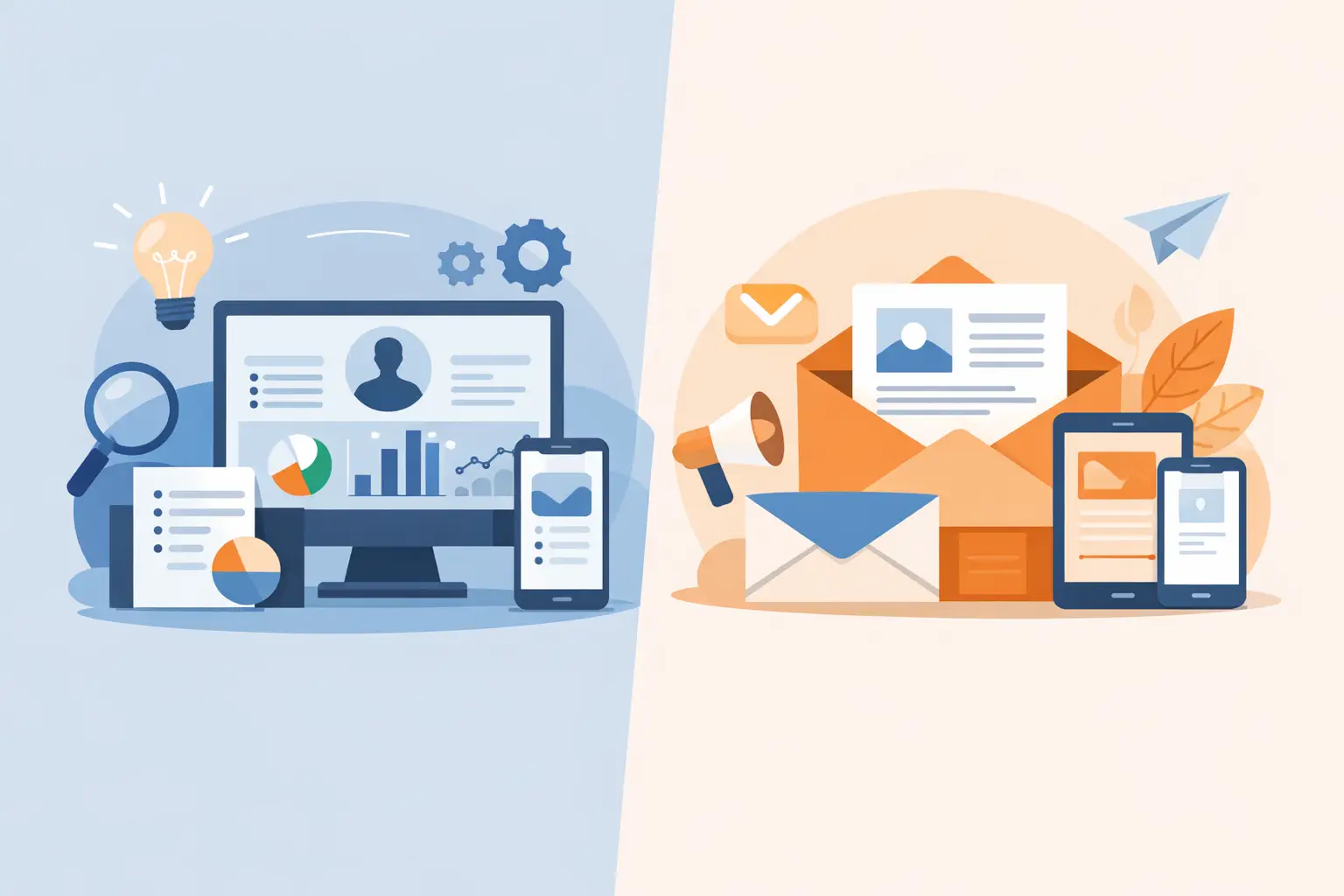
If your morning starts with ten unread newsletters, three Slack channels, and a saved tab list you never quite finish, you do not have an information problem. You have a filtering problem. That is the real issue in briefing software vs newsletters. Both promise to keep you informed, but they serve very different operating needs.
A newsletter is usually a publishing product. Briefing software is an intelligence system. That distinction matters more than most teams realize.
For professionals in fast-moving sectors, the question is not which format feels familiar. It is which one improves awareness, speeds decisions, and reduces monitoring time without degrading judgment. Once you evaluate both through that lens, the gap becomes clear.
Briefing software vs newsletters: the core difference
Newsletters are designed to distribute content to an audience. Even very good ones are built around editorial packaging. An editor or brand decides what matters, writes to a broad segment, and sends the same issue to thousands of readers. Personalization, if it exists, is usually light - perhaps by industry, topic, or subscription list.
Briefing software works from the opposite direction. It starts with the user, not the publisher. The system maps a person’s role, sectors, watch areas, strategic priorities, and recurring interests. It then processes a wide range of inputs and turns them into a prioritized briefing. The point is not more content. The point is a decision-ready view of what changed, why it matters, and what deserves attention now.
That difference sounds simple, but operationally it changes everything. A newsletter asks, "What should our audience read today?" Briefing software asks, "What does this specific person need to know before their first meeting?"
Why newsletters still work well
Newsletters remain useful because they solve a real problem. They are easy to subscribe to, easy to skim, and often written by people with taste and domain knowledge. If you want commentary, market voice, or a quick read on a specific niche, a strong newsletter can be excellent.
They are also effective when your need is broad orientation rather than targeted intelligence. A founder exploring a new market, an investor tracking general sentiment, or a strategist looking for fresh perspectives may benefit from a curated set of editorial products. Newsletters can surface ideas you were not explicitly looking for, which is one reason people keep subscribing.
There is also a trust factor. Many readers develop confidence in a particular analyst, operator, or publication over time. That voice becomes a useful heuristic. In uncertain markets, informed editorial judgment still has value.
But newsletters have structural limits. They are typically one-to-many. They summarize what the publisher thinks matters, not what your role demands. If you work across multiple domains, those limits become expensive very quickly.
Where newsletters break under operational pressure
The problem is not that newsletters are bad. The problem is mismatch.
When your work depends on timely signal, generic distribution starts to fail. A CTO tracking model releases, compute markets, data regulation, and vendor moves is not well served by five separate newsletters that each cover one slice inconsistently. An operator managing supply chain exposure does not need a clever essay on logistics once a week. They need a daily read on disruptions, pricing pressure, policy shifts, and second-order impacts.
This is where newsletter overload sets in. Each issue may be individually useful, but the workflow around them is inefficient. You scan subject lines, triage relevance, open several tabs, read repetitive summaries, and still have to form your own synthesis. Time is spent assembling context rather than acting on it.
There is another issue: newsletters rarely compound into usable institutional memory. They live in inboxes, get archived loosely, and become hard to search as your questions become more specific. Six months later, when you want to revisit how a policy story evolved or when a vendor first showed signs of weakness, the newsletter stack is a poor retrieval system.
What briefing software changes
Briefing software is designed for users who need signal, not just content. Its job is to absorb fragmented inputs and produce a concise, structured briefing aligned to your priorities.
That means relevance improves first. Instead of receiving what a publisher sends, you receive what your profile calls for. Role matters. Industry matters. Personal watch areas matter. The difference between a generic AI news digest and a briefing tuned to semiconductor supply, inference economics, model governance, and cloud pricing is not cosmetic. It changes what rises to the top.
Second, briefing software adds synthesis. This is a major separation point in briefing software vs newsletters. Aggregation collects links and snippets. Synthesis interprets developments across sources, removes duplication, and presents the operational takeaway. For a busy executive or analyst, that is where real time savings show up.
Third, the product becomes more valuable over time. A searchable briefing archive creates continuity. It helps you track developments, compare shifts in narratives, and revisit prior signals without digging through old inbox clutter. At that point, the tool is no longer just a daily update. It becomes a working memory layer for your domain.
The trade-off: breadth of voice vs precision of relevance
This is not a case where one format eliminates the other in every scenario. The trade-off is fairly direct.
Newsletters are better for editorial voice, perspective, and discovery outside your preset frame. They often feel more human because they are written as publishing products. If your goal is to stay generally informed and enjoy expert commentary, they are still worth reading.
Briefing software is better for precision, prioritization, and repeatable monitoring. It is built for execution environments where relevance and speed matter more than personality. If your question is, "What changed that affects my decisions today?" briefing software has the stronger claim.
Some professionals will still use both. That can be a sensible setup. A few trusted newsletters can remain part of the mix for opinion and edge cases, while the daily operating layer shifts to software that is built to brief rather than broadcast.
How to decide which model fits your workflow
The cleanest way to assess briefing software vs newsletters is to look at your current behavior, not your stated preferences.
If you read for insight, enjoy distinct voices, and only need periodic updates in a narrow topic, newsletters may be enough. If your information needs are moderate and your tolerance for manual sorting is high, the economics are acceptable.
If you monitor several domains, depend on early signal, and routinely waste time reconciling overlapping sources, newsletters are probably underpowered for the job. The more your role requires cross-domain awareness, the more valuable structured briefing becomes.
Ask a harder question: where does interpretation happen today? If the answer is "in my head after I scan everything," that is a fragile workflow. It depends on energy, memory, and available time. It also breaks on busy days, which are usually the days when awareness matters most.
The stronger model is one that externalizes that work into a system built for prioritization and continuity.
What serious teams should optimize for
Most information products compete on volume, access, or style. Serious teams should optimize for signal quality per minute.
That means fewer inputs, sharper prioritization, and outputs that connect developments to action. It also means retaining context over time. A briefing that tells you what changed today is useful. A briefing system that shows how today fits into the last ninety days is much more powerful.
This is why the category matters. Briefing software is not just a nicer newsletter format. It represents a different operating model - one based on tailored intelligence, not mass distribution.
For decision-makers, that distinction is practical. Better filtering leads to better focus. Better focus improves speed. Speed, when paired with context, becomes advantage.
Platforms like BriefingIQ are built around that premise. Not as another inbox subscription, but as a digital briefing function for people who cannot afford low-signal monitoring.
The useful test is simple: after you read, are you merely informed, or are you ready to act? That is where the real separation happens.